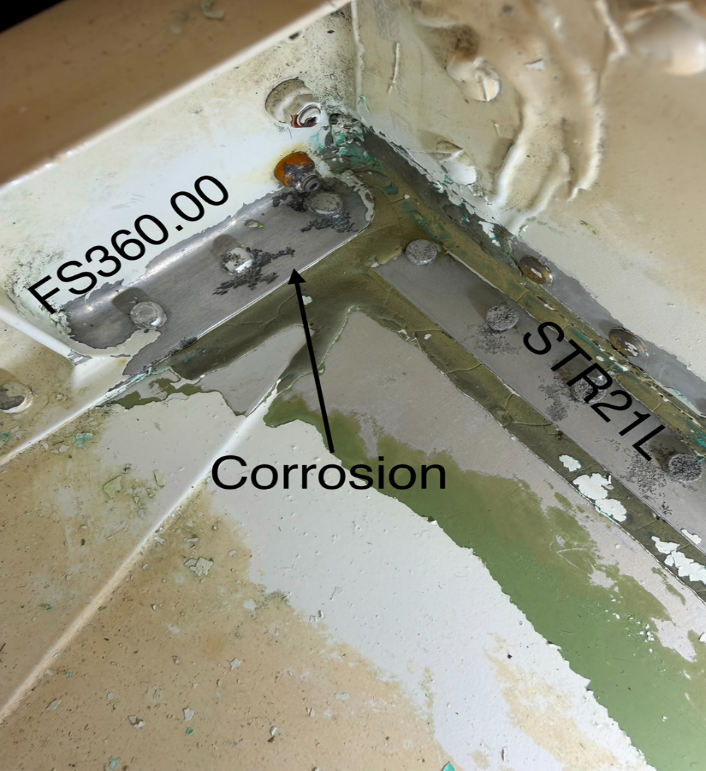
Challenger 300 Main Entry Area Corrosion: Field Insights
A recurring structural pattern in the Challenger 300 fleet — what's driving it, and why operators should catch it before the 192-month inspection turns into a major structural repair.
Over the past year, we've seen a pattern emerge across the Challenger 300 fleet: heavy corrosion in the main entry area, most often surfacing during the 192-month inspection. This isn't an isolated finding — it's a trend. Left alone, it turns a scheduled inspection into a major structural repair, with the downtime and cost to match.
The problem: hidden corrosion in a high-risk area
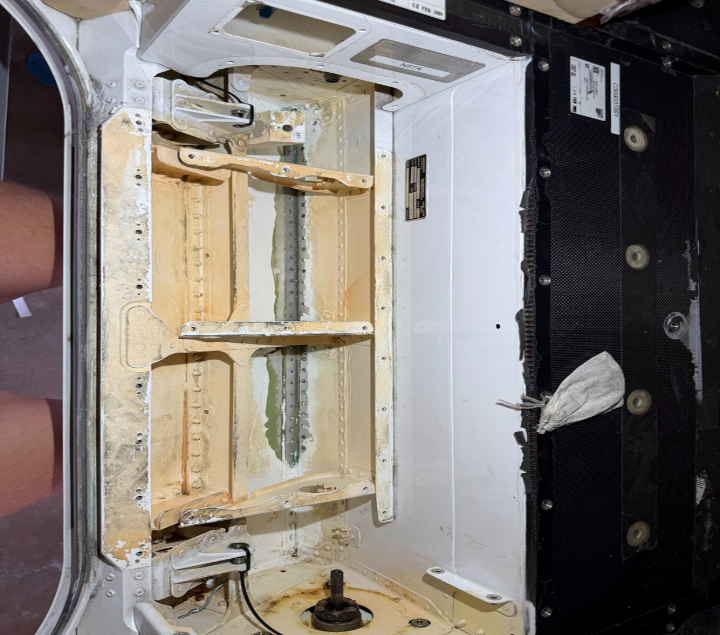
Across multiple recent inspections, we've identified heavy corrosion on frames and stringers within the main entry area. The Challenger 300 uses a damage-tolerant structure, which means repairs in this region are highly engineered and generally limited to OEM-approved methods. That makes the work both time-consuming and expensive once it's already there.
Root cause #1: ineffective drainage design
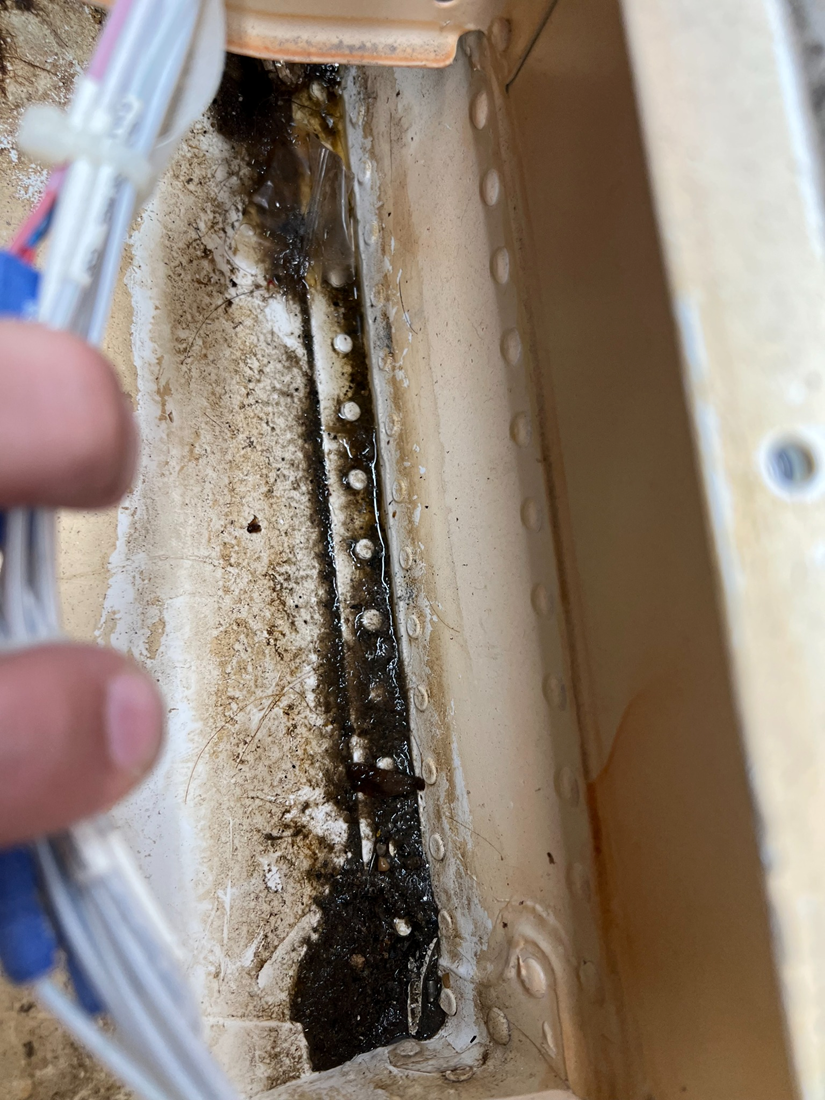
The primary driver is water intrusion combined with poor drainage beneath the main entry doorstep. Water pools under the step with no efficient path out. A drain hole exists, but it only starts functioning once water reaches a specific level — and when drainage does occur, it routes water into the middle of the fuselage, soaking the insulation and giving moisture another path to migrate.
Bombardier has addressed this with SB 100-53-36 (Challenger 300) and SB 350-53-005 (Challenger 350), both aimed at improving drainage in the passenger door area.
Root cause #2: missed findings during scheduled inspections
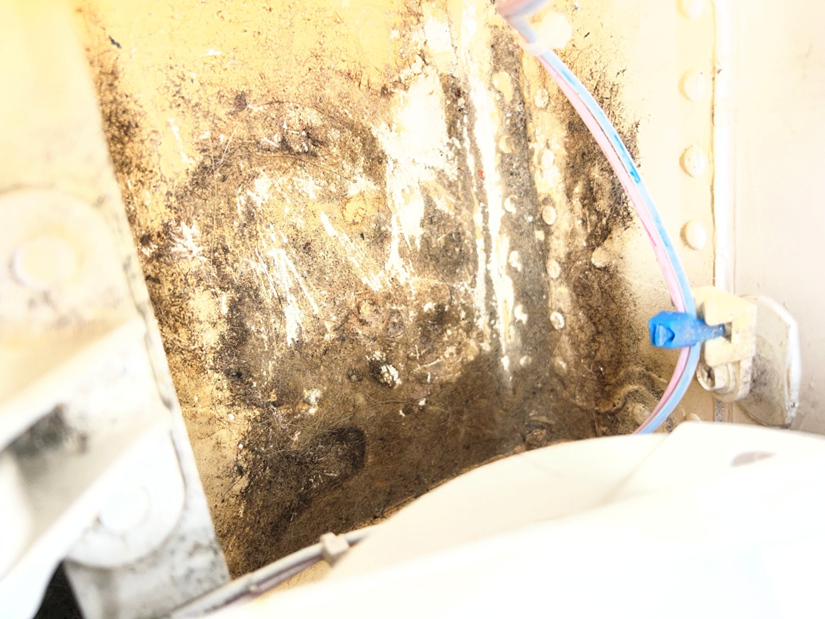
During 48- and 96-month inspections, limited access and inadequate cleaning can mask corrosion that is already present. Bombardier emphasizes proper cleaning and access prior to inspection in AW300-53-0420 — and it matters. You cannot inspect what you cannot see.
The Plane Place Aviation approach
We've completed several full frame and stringer replacements in the main entry area on Challenger 300s. Our structural team knows this region, and we turn repairs and replacements around quickly. Because the work stays in-house, operators avoid the downtime and resale damage that comes with a major-repair history on the aircraft logs.
Takeaways for operators
Verify the service bulletins
Check whether the drainage-improvement SBs have been incorporated on your aircraft.
Prioritize access and cleaning
Ensure inspections include full access, thorough cleaning, and detailed visual checks — not a quick look through what's already there.
Pick a provider who can repair, not just inspect
Make sure your maintenance provider has the in-house capability to perform complex structural repairs — not just run the inspection. This is the deciding factor for 48-, 96-, and 192-month events.
Early detection is the only way to keep a minor maintenance finding from becoming a major structural overhaul.
Inspection cadence, recurring findings, parts notes, and what operators should know about challenger maintenance with PPA.
Seeing something similar on your aircraft?
We handle Challenger structural work in-house. Send us the squawk or your upcoming inspection scope — we'll tell you what we'd do about it.